Seasonal Home Textiles
How to Choose a Linen and Wool Throw for Every Season
A considered throw is more than an extra layer. By balancing linen’s airy character with wool’s soft warmth, it can bring comfort, texture and an easy sense of finish to a room throughout the year.
Published October 16, 2026
A good throw has a particular kind of usefulness: it is close at hand without demanding attention. Folded over the arm of a chair, placed at the foot of a bed or drawn around the shoulders on a cool evening, it makes a home feel more comfortable in an instant. The most versatile versions are not necessarily the heaviest. Instead, they rely on a thoughtful combination of fibers, weave and weight—qualities that determine whether a textile feels airy, substantial, soft or crisp.
Linen and wool make a compelling pairing because they contribute different qualities to the same cloth. Linen, made from flax, is valued for its textured surface and breathable feel. Wool brings softness, resilience and a familiar sense of warmth. In a well-balanced blend, neither fiber needs to dominate: the result can feel substantial enough for a chilly evening yet relaxed enough to layer across changing seasons.
Choosing among linen and wool throws is ultimately a matter of context. Consider the room where the throw will live, the temperatures you experience, how you like a textile to feel against the skin, and how much care you are prepared to give it. Understanding those details makes it easier to choose a throw that feels right beyond the first impression.
Why linen and wool work together
The appeal of a blended throw begins with contrast. Linen tends to have a dry, gently irregular hand and a relaxed drape. Its fibers lend the fabric a naturally tactile quality, while the open, breathable feeling of many linen weaves makes the material comfortable in a range of indoor temperatures. The surface may soften with use, developing the lived-in character often associated with natural-fiber textiles.
Wool offers a different contribution. Its fibers create a soft, insulating layer that helps a throw feel welcoming when the air turns cool. Wool can also give fabric body and spring, so a textile may feel less flat than a light, all-linen alternative. The exact sensation depends on the type and proportion of fibers, the yarns used and how tightly the cloth is woven.
There is no single ideal ratio for every household. A blend with a larger share of linen may feel more textured and comparatively light, while a greater share of wool can make the fabric feel softer or warmer. Percentages are useful clues, not a complete forecast of performance. A loosely woven cloth with a high wool content may feel different from a compact weave made with a similar blend. Whenever possible, consider composition alongside the product’s stated weight, construction and care instructions.
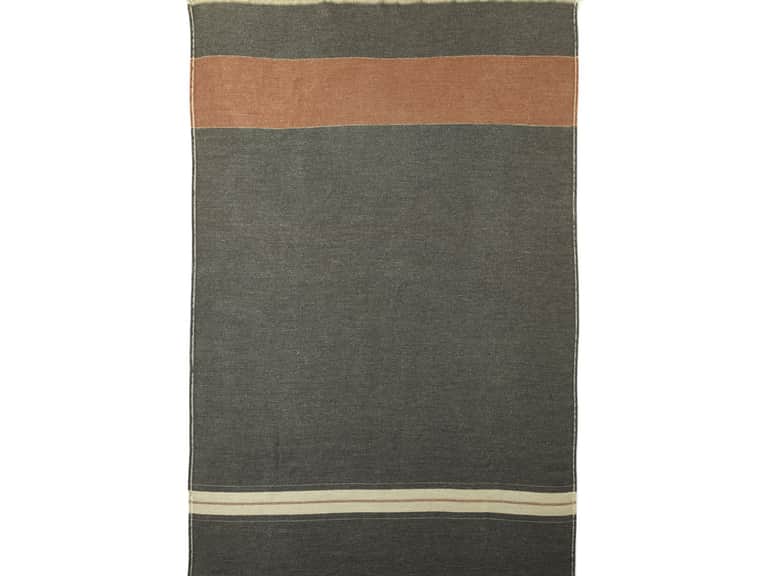
For an example of this balance, the Luc Throw combines 70% linen and 30% wool. Its washed texture and end stripes give it a relaxed finish, while the blend is described as breathable and substantial without feeling excessively heavy. It illustrates how a linen-wool throw can be designed for layering rather than confined to a single season.
Start with the room, not the calendar
Seasonal labels are helpful, but the room itself is often a better guide. A throw in a sunlit living room, a cool bedroom or a drafty reading corner will meet different needs. Central heating, air conditioning, window exposure and personal comfort all affect whether a fabric feels light or warm. Before choosing, think about when and where you are most likely to use it.
For a warm room or a home with mild winters, look for a lighter-weight textile with an open, breathable construction. It can be draped over the lap or used as a decorative layer without adding too much insulation. In a cooler room, a denser weave or a blend with a more noticeable wool presence may feel more satisfying. If the throw will move between rooms, a moderate weight is often the most adaptable option.
Also consider the way the throw will be used. A piece intended for occasional warmth at the end of the day may prioritize softness and generous coverage. One that stays on a sofa or bed every day should be easy to handle, durable enough for regular use and attractive when casually folded. For travel between indoor and outdoor settings, check the maker’s guidance: a decorative natural-fiber textile may not be designed for damp conditions or rough use.
Practical questions can clarify the choice:
- Will it be used mainly for warmth, as a finishing layer, or for both?
- Is the room consistently warm, naturally cool or subject to drafts?
- Will the throw be shared, moved frequently or kept in one place?
- Do you prefer a soft, enveloping feel or a lighter, more textured hand?
- Is there enough time and space to follow a delicate care routine?
The difference weave makes
Fiber content explains what a throw is made from; weave helps explain how it behaves. A more open weave can feel airy and flexible, allowing the fabric to drape easily. It may suit layering in spring and summer, when a heavy covering feels unnecessary. A tighter or more compact construction generally feels more substantial and may hold warmth more effectively, although thickness and fiber proportions remain important.
Texture is part of the experience, too. Plain weaves offer a composed, versatile surface that can sit comfortably with patterned bedding or upholstery. Stripes introduce rhythm and can draw the eye to a sofa or the end of a bed. Varied yarns and woven sections add depth without requiring a strong color contrast. Washed finishes often soften the overall appearance, giving a throw a relaxed quality rather than a crisp, formal one.
Look closely at the edges. Fringes, hems and finished borders influence how a throw hangs and how it feels to handle. A fringe can bring a casual note, while a clean edge may read as more tailored. These details do not determine warmth, but they matter when the throw is part of the room’s visual composition. A textile that looks considered folded over a chair is more likely to earn a place in daily life.
Weight is sometimes listed in product specifications, but it may not be available for every design. If it is, treat it as one point of comparison rather than a quality score. A heavier throw can feel comforting in winter, yet may be less convenient to move or store. A lighter one can be easy to keep close, but may not offer enough coverage on a cold evening. The best choice is the weight that meets your needs without making the textile cumbersome.
Choosing a throw through the seasons
Spring: a flexible layer
Spring brings variable temperatures: a room may feel bright and warm in the afternoon, then cool again after sunset. A medium or lighter-weight linen-wool throw can bridge that shift. Choose a drapey construction that is easy to fold away, with enough wool in the blend to offer a little comfort when the air changes. Soft neutrals, muted greens, stone shades and gentle stripes can sit naturally alongside the lighter fabrics and colors often brought into a room at this time of year.
Summer: texture without excess warmth
In summer, a throw may be more about texture and an occasional layer than full insulation. Prioritize a breathable feel, a relaxed drape and a weight you will actually want to use. Linen-forward blends can be appealing in warmer interiors, although the precise comfort level depends on the complete construction. A smaller fold across the foot of a bed or the back of a chair adds definition while remaining easy to move when temperatures rise.
Natural fibers should not be treated as a guarantee of comfort in every climate. A densely woven or heavy textile may still feel too warm in a hot room. Consider ventilation and room conditions, and use the throw when it adds comfort rather than following a seasonal rule.
Autumn: welcome more substance
As evenings grow cooler, a more substantial blend comes into its own. Wool can contribute the soft, cozy quality many people want for reading, relaxing or adding a layer over the bed. Linen remains valuable here: its texture can keep a heavier throw from feeling visually or physically too dense. Look for a balanced hand and enough coverage for the way you sit or sleep, rather than choosing solely by a product’s color or name.
Winter: layer with intention
During winter, a linen-wool throw can work as an additional layer over a duvet, across a sofa or around the shoulders. It is especially useful when different members of a household prefer different levels of warmth. Instead of relying on one extremely heavy covering, layering lets you adjust comfort as needed. A denser weave or a blend with a stronger wool presence may provide a cozier feel, while a lighter throw can remain useful indoors when rooms are heated.
For bedding, remember that a throw is a supplement, not a replacement for a sleep system suited to your climate and comfort preferences. Keep it within easy reach and remove it when it becomes too warm. This simple flexibility is one of the reasons seasonal home textiles can be more useful than their decorative role suggests.
Color, pattern and the art of placement
A throw changes the atmosphere of a room even when its practical purpose is simply to stay within reach. Natural-fiber fabrics often make color feel nuanced: the surface can shift subtly with the weave, yarn and finish. Warm grays, flax tones and earthy shades create a quiet foundation; darker colors can add definition; a restrained stripe introduces movement without overpowering a room.
Think about the surfaces around the throw. A textured textile may contrast beautifully with a smooth sofa or crisp bed linen. If the room already contains strong patterns, a simple weave can restore balance. Conversely, a woven stripe can give a calm, neutral space a little structure. The goal is not perfect matching, but a relationship between colors and textures that feels coherent.
Placement matters as much as palette. Fold a throw neatly across the foot of a bed for a composed look, or leave it loosely draped over a chair to suggest ease. On a sofa, keep part of it accessible rather than arranging it so precisely that it feels untouchable. A throw earns its place when beauty and usefulness coexist.
Care that protects texture and shape
Natural-fiber throws can reward careful use, but linen and wool blends should not be assumed to share the same washing requirements. The manufacturer’s label is the authority. Check it before purchase, especially if you expect the throw to be washed frequently or if convenient home laundering is important. Some products call for a gentle or wool cycle; others may recommend a different approach or professional care.
When washing is permitted, follow the stated temperature and cycle, use a suitable mild detergent, and avoid harsh treatments unless the instructions explicitly allow them. Excessive heat, rough agitation and over-drying can affect the fabric’s feel, dimensions or finish. Do not rely on general advice for all wool blends: construction, dye and finishing can change what is safe.
Between washes, airing a throw and addressing small marks promptly may help keep it fresh. Store it clean and fully dry, folded loosely in a dry place. Avoid hanging a heavy textile for long periods if doing so could distort its shape. If a throw develops a snag, resist pulling the yarn; consult the care guidance or a textile professional for a suitable repair approach.
Fiber blends may include additional materials beyond linen and wool. For example, the Luc Throw is described as 70% linen and 30% wool, while other linen-wool textiles can have different compositions. Read the complete product details rather than assuming that every blended throw behaves identically. Care requirements follow the actual cloth, not just its broad category.
A practical checklist before you choose
When comparing natural fiber throws, use the following questions to make the decision more precise:
- What is the exact fiber composition? Compare the linen and wool percentages, and note any additional fibers.
- How does the fabric feel? If you can handle a sample or see the item in person, assess softness, texture, drape and surface irregularity.
- What is the construction? Look for information about weave, finish, edge treatment and whether the cloth is intended to feel light or substantial.
- Where will it be used? Match the throw’s weight and coverage to the room’s temperature and your daily habits.
- How should it be cared for? Confirm washing, drying and storage guidance before committing.
- Will its scale suit the setting? Consider whether the dimensions cover a lap, fit across a bed or work primarily as an accent.
- Does it complement what you own? Consider color and texture in relation to bedding, upholstery and other textiles.
This checklist helps distinguish a throw that is merely attractive from one that genuinely fits a household’s routines. The most beautiful option is not necessarily the most useful if it is too warm, too small or difficult to care for. Conversely, a well-chosen throw can become a dependable layer precisely because it feels effortless to use.
What to expect from natural fibers
Linen and wool are natural materials, and subtle irregularities in yarn or texture can be part of their character. A surface that is not perfectly uniform does not automatically indicate a flaw. Variation may be more noticeable in artisanal or textured fabrics, where the character of the yarn is intentionally visible. Product descriptions and care notes can help clarify what is expected for a particular item.
It is also sensible to keep claims measured. Breathability, warmth and softness are influenced by more than fiber names alone: weave, fabric weight, finishing and the conditions in which a throw is used all play a role. No blend can promise the same sensation for every person or every room. When available, rely on specific composition and construction details, then consider your own experience and preferences.
That practical understanding is part of buying well. Instead of treating a natural-fiber throw as a seasonal novelty, think of it as a durable household textile whose usefulness depends on fit, care and regular use. Selecting the right one can mean fewer decorative layers that sit untouched and more comfort that adapts as the day changes.
The lasting appeal of a thoughtful throw
A linen and wool throw sits at an appealing intersection: tactile but not overly formal, comforting without necessarily feeling heavy, and decorative while remaining genuinely useful. Its value lies in that flexibility. A breathable, textured cloth can rest over a chair in warmer months, then become a welcome layer when the evenings turn cool. With an appropriate blend and weave, one textile can serve several rooms and purposes.
Choose by the details that shape everyday experience: fiber ratio, construction, weight, dimensions and care. Then consider the room’s temperature and the way you want the throw to feel. The right choice may be a light layer for an airy interior or a more substantial textile for long, cool evenings. In either case, the best seasonal home textile is one that feels natural in the rhythm of your home—easy to reach for, easy to live with and lovely enough to leave on display.